
What Warren County Property Tax Records Show
Each field on a Warren County tax record answers a different question, from who is listed as owner to what value is actually taxed.
| Field | What It Shows | Where |
|---|---|---|
| Assessed value | Roll-year assessment | Local assessor and RPTS |
| Market / appraised value | Assessment divided by level of assessment | Local assessor and RPTS |
| Exemptions | STAR, senior, veteran, first responder, and other categories | Local assessor and RPTS |
| Tax bill & status | Bill, payment, and delinquency status | Local collector or County Treasurer |
| Taxing districts | Applicable municipal, school, and district rates | Local collector or County Treasurer |
assessed vs market value, and why the tax bill is not the sale value.
Looking Up a Warren County Tax Bill
Finding a Warren County tax bill takes an address or parcel number and the right collector. Payment status lives with the collector for current bills and with the Treasurer once a balance goes delinquent.
- search the Warren County Property Taxes portal by address or parcel
- read the current bill, prior years, and payment status
- check exemptions applied on the assessor record
- note delinquency and any tax lien or pending sale
- Assessed value
- the taxable portion.
- Mill rate / levy
- how the tax is computed.
- Homestead exemption
- owner-occupied relief.
- Tax lien
- claim for unpaid taxes.
Appealing a Warren County Assessment
A Warren County owner who disagrees with an assessed value has a formal path to contest it. The review board sets the deadline, and the strongest cases lean on evidence rather than frustration.
Appeal window. Warren County assessment appeals must be filed by the fourth Tuesday in May grievance date with the local Board of Assessment Review; missing the window means waiting for the next cycle.
Warren County Tax Custodians
Warren County property tax records sit across three levels of government. The local assessor builds the assessment and defends it. Real Property Tax Services supports the rolls, tax maps, transfer reporting, rates, and county data. Current bills belong to the local collector. Delinquent balances, payment plans, foreclosure, and the county tax system fall to the Treasurer. The County Clerk records tax liens and deeds. That office does not calculate a parcel's current bill.
Begin with the roll year and the municipality. A Glens Falls parcel goes to the city assessment office. Town parcels go to their own assessors. Match the print key or SBL across the roll and the tax account. Owner spelling alone is a weaker guide after a transfer. It also weakens when an entity holds title.
Read Warren Final Assessment Rolls
The county posts final assessment rolls by municipality and year. Recent material spans 2016 through 2026 where available. A roll is an annual snapshot. It can show the owner listed for assessment, the property description, the tax-map number, assessed value, taxable value, and exemption effects. It does not replace a deed or provide a live payoff amount. The official final-roll directory is displayed below.
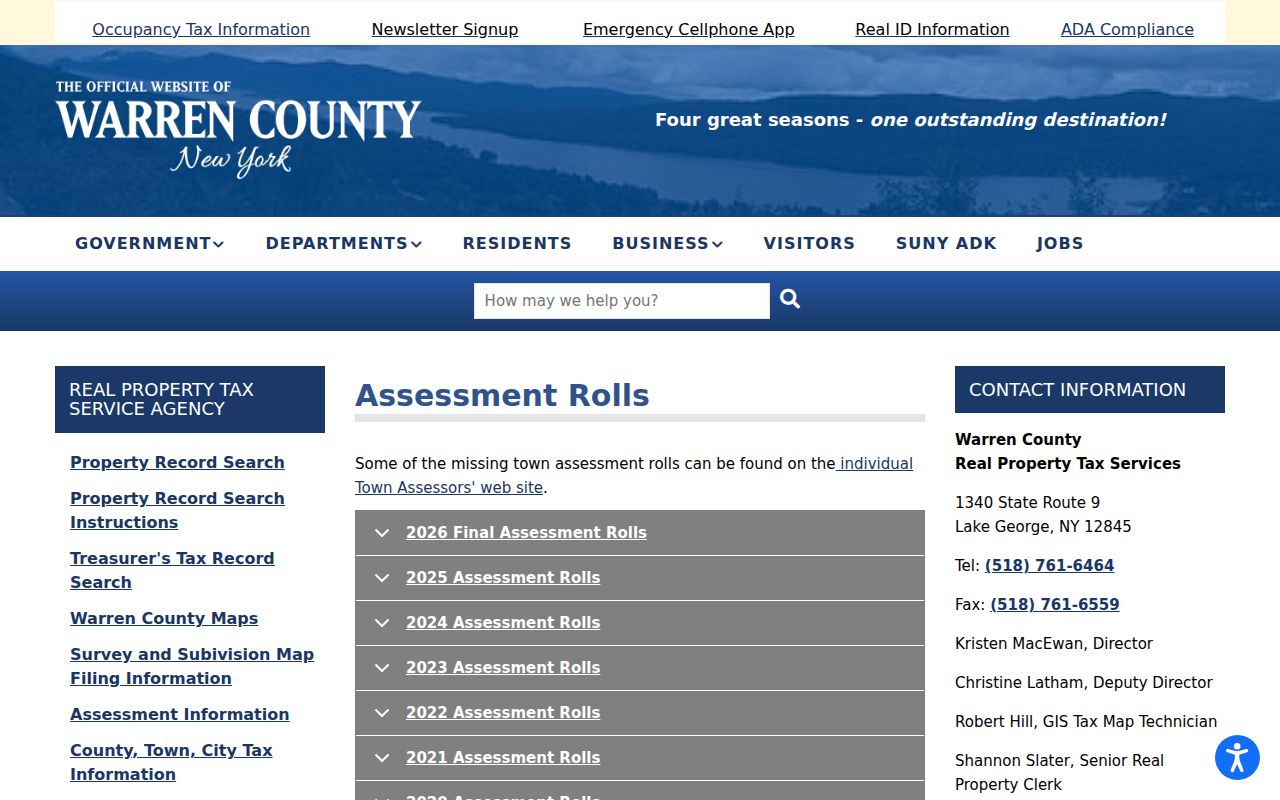
Carry the roll year with every figure you pull. Comparing rolls year over year can reveal a value or owner-field change, but the reason must be checked in the deed, the exemption file, or the assessor record.
Warren Assessment and Full Value
New York treats an assessor's market-value estimate as assessment divided by the level of assessment. That distinction matters where a municipality assesses at a fraction of full value. The assessed figure, the full-market field, the taxable figure, and the actual sale price are separate data points. The state assessment formula is shown below.
Exemptions can push taxable value below assessed value. A recent arm's-length sale may be evidence of market value, yet it does not automatically become the assessment or the tax bill.
- Assessed value
- The value placed on the roll for assessment administration.
- Level of assessment
- The municipality's relationship between assessments and full value.
- Taxable value
- The amount remaining after applicable exemptions.
- Tax lien
- A legal claim securing unpaid tax, distinct from ownership.
Warren Assessment Calendar
The local calendar ordinarily sets taxable status and exemption filing on March 1, the tentative roll on May 1, and the final roll on July 1. Grievance day lands on the fourth Tuesday in May. Confirm the local calendar, because a special assessing unit can vary. Waiting for the tax bill is too late to start the ordinary administrative challenge. The county assessment calendar appears below.
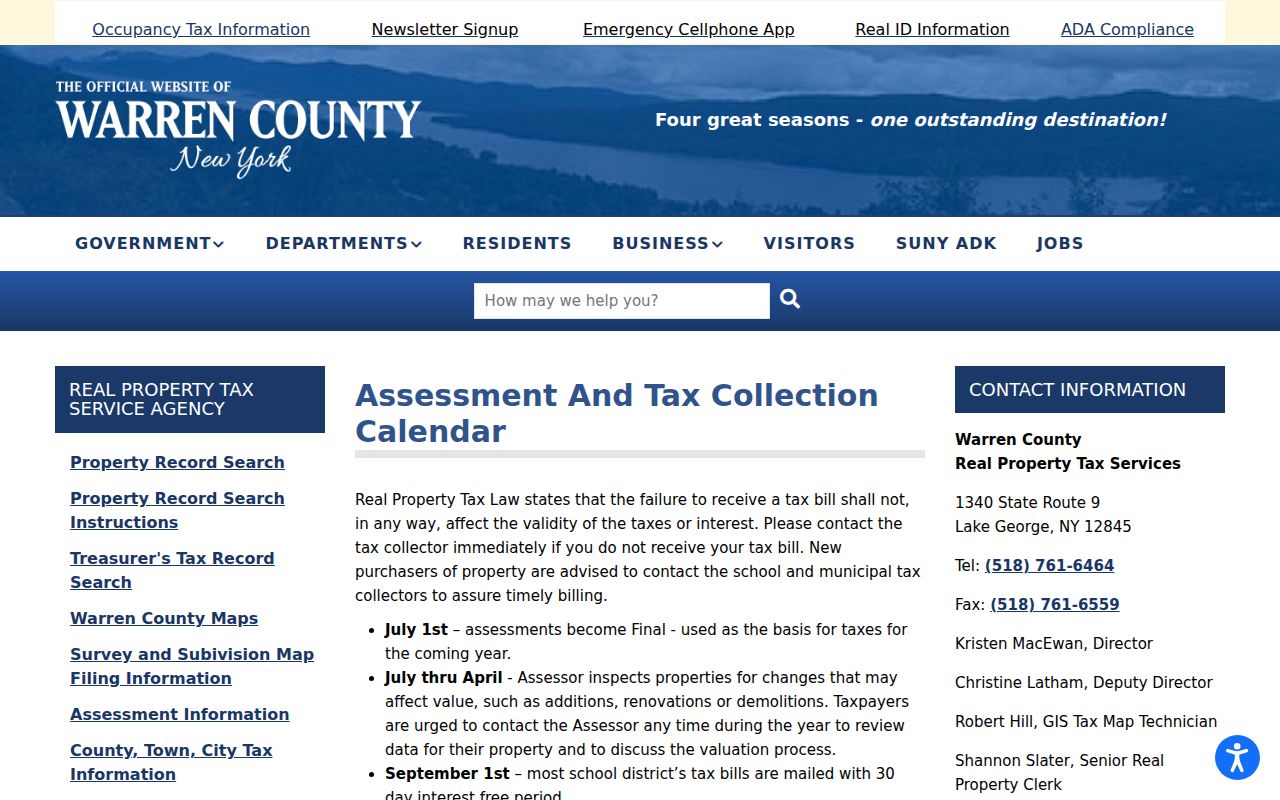
An owner should review the tentative roll and speak with the assessor first. When informal review does not resolve the issue, file RP-524 with supporting evidence by grievance day.
Grieving a Warren County Assessment
A grievance targets the assessment, not the tax rate or the fact that a bill is due. Useful evidence can include a recent appraisal, comparable sales, photographs documenting condition, income and expense records for income property, or proof that the parcel record lists the wrong size or improvements. The Board of Assessment Review decides the administrative complaint. The official New York grievance procedure is displayed below.
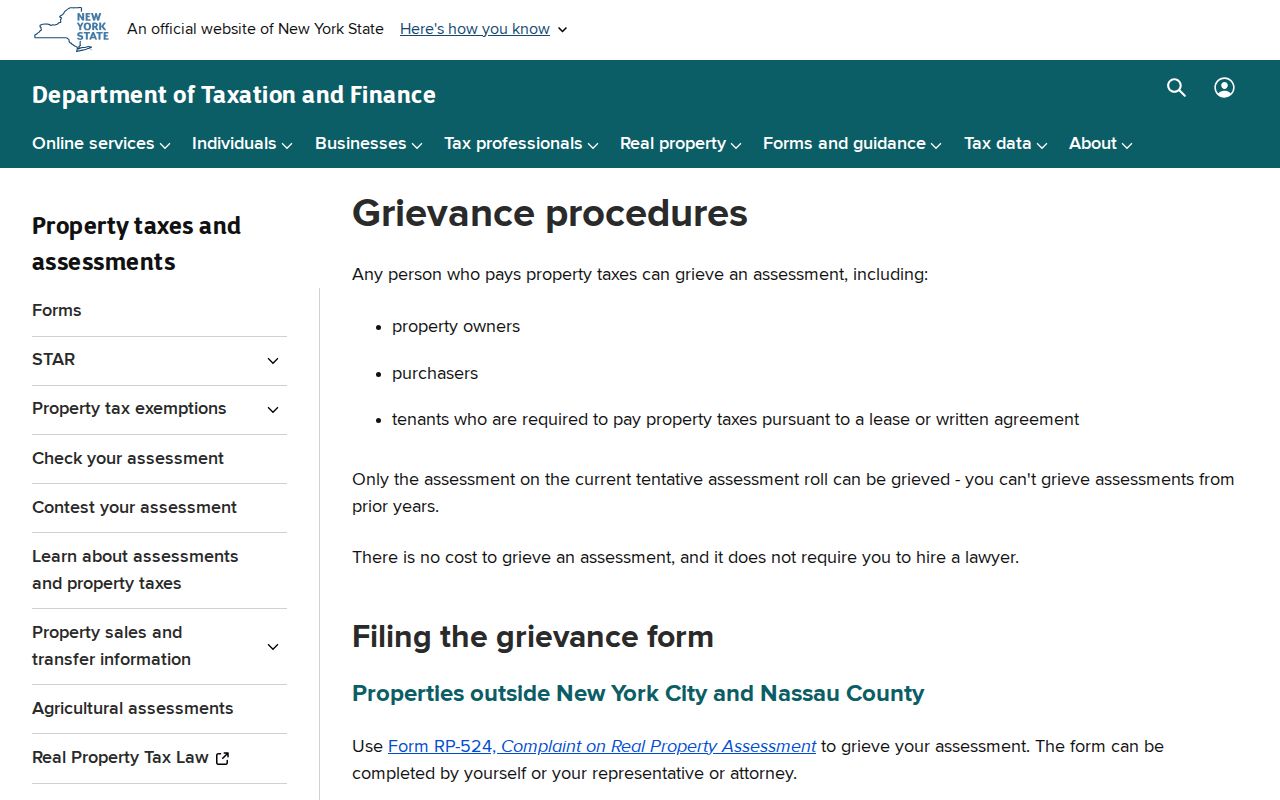
Judicial routes may follow the administrative decision under separate rules. Keep the filed form, evidence, receipt, and determination on hand.
Warren Exemptions and Taxable Status
County materials identify STAR, senior, veteran, first-responder, and other exemption programs. Eligibility and benefit turn on state law, local option, ownership, use, age, service, income, or the filing date. Or they turn on the filing date alone in some cases. The assessor, not a portal summary, decides the application.
March 1 is the common taxable-status and exemption date. A prior-year exemption does not promise it continues. It may not transfer to a new parcel, or apply to a new owner. Ask the local assessor which form and proof are required.
Warren Delinquency and Foreclosure
Warren County's 2026 news set July 31, 2026 as the final redemption date for taxpayers notified in that foreclosure cycle, and the auction page listed October 17, 2026 for the annual auction. These are dated events, not standing deadlines. Verify the specific parcel notice and any adjournment with the Treasurer.
Local Law No. 3 of 2026 permits installment agreements for delinquent real-property taxes across property classifications. The lien remains in place. Compliance can pause foreclosure, default can accelerate enforcement, and prior delinquency conditions can affect eligibility. The law is neither forgiveness nor proof that an account carries an agreement.
Warren County posts tax rates by year. Rates cover county, city or town, school, and special district purposes. A rate alone will not reproduce a bill. You also need the correct taxable value and jurisdiction. Special districts can add their own line. Read the actual account and rate year. Do not multiply a countywide number into an estimate. Before relying on Warren County property tax records, reconcile the assessment year, the taxable-status date, the bill year, and the payment date. Those dates describe different stages of the same account. A payment made later may not appear on an earlier statement. A later deed may not appear on the roll used for that bill.
If payment fraud worries you, confirm wiring or remittance instructions with the issuing office. Do so through a known official channel. A county fraud notice is payment-safety guidance. It is not evidence that a parcel or its taxpayer is fraudulent. Confirm every deadline and every balance with the responsible Warren County tax office before acting.
Keep copies that matter. Save the roll page, the bill, the receipt, the exemption determination, and the grievance decision. Together those documents preserve the Warren County tax history. An undated portal screenshot never could.