
What the Warren County Current Owner Record Shows
Every Warren County owner-of-record display leans on a few standard fields. Learning what each field means turns a property records lookup into a reliable answer about who holds the parcel.
| Owner of Record | Name(s) vested today |
|---|---|
| Vesting / Tenancy | Joint tenants, trust, LLC, etc. |
| Mailing Address | Where the owner gets tax notices |
| Situs Address | The property itself |
| Deed Reference | The recording that vested them |
| Ownership Since | Date of the current deed |
The owner of record is not always the occupant, and the tax mailing address is the strongest contact clue a property search will give you.
Confirming the Current Owner in Warren County
Going past the assessor roll means reading the deed itself. Use the latest recorded deed in the Warren County deed records to confirm the grantee and vesting behind the owner of record.
- read the owner of record on the Warren County Real Property Search
- pull the most recent deed in the SearchIQS to confirm vesting
- if an LLC or trust, identify the people behind it via the Secretary of State
- note the owner mailing address for contact
- Owner of record
- The party the records show as owner.
- Vesting
- How title is held - joint, trust, entity.
- Registered agent
- The contact for an LLC/entity owner.
Reaching a Warren County Property Owner
The tax roll's mailing field is the lawful channel for reaching an owner of record. Some details stay private, and knowing those limits keeps a parcel contact within bounds.
Lawful use. contacting a Warren County owner through the public mailing address is fine for property matters; using owner information to harass or intimidate is a crime under New York law.
Warren Owner-of-Record Fields
The Warren County GIS and assessment systems carry the fields that make up the administrative record card: OWNER, OWNER1, OWNER2, the mailing fields, the property address, the deed book and page, and the roll year. Together they describe the parcel as the county holds it. Owner of record means the name that source carried for that date. It is not a warranty of present title. It is not a list of occupants either.
The property address pins down the land itself. The mailing address is where assessment and tax correspondence goes, and it may be a post office box or a service address rather than a home. Keeping those two roles separate matters when you contact a current owner.
Check the Latest Warren Deed
Start with the record card's owner name. Note its deed book and page, then search SearchIQS for the parcel. Read the grantee vesting on the latest deed. Confirm the document describes the same parcel. Check afterward for a later correction, executor's deed, quitclaim, or other conveyance. A matching name without a matching parcel proves little.
The Warren County Clerk SearchIQS entry is the official deed index entry point. Use it for this search.
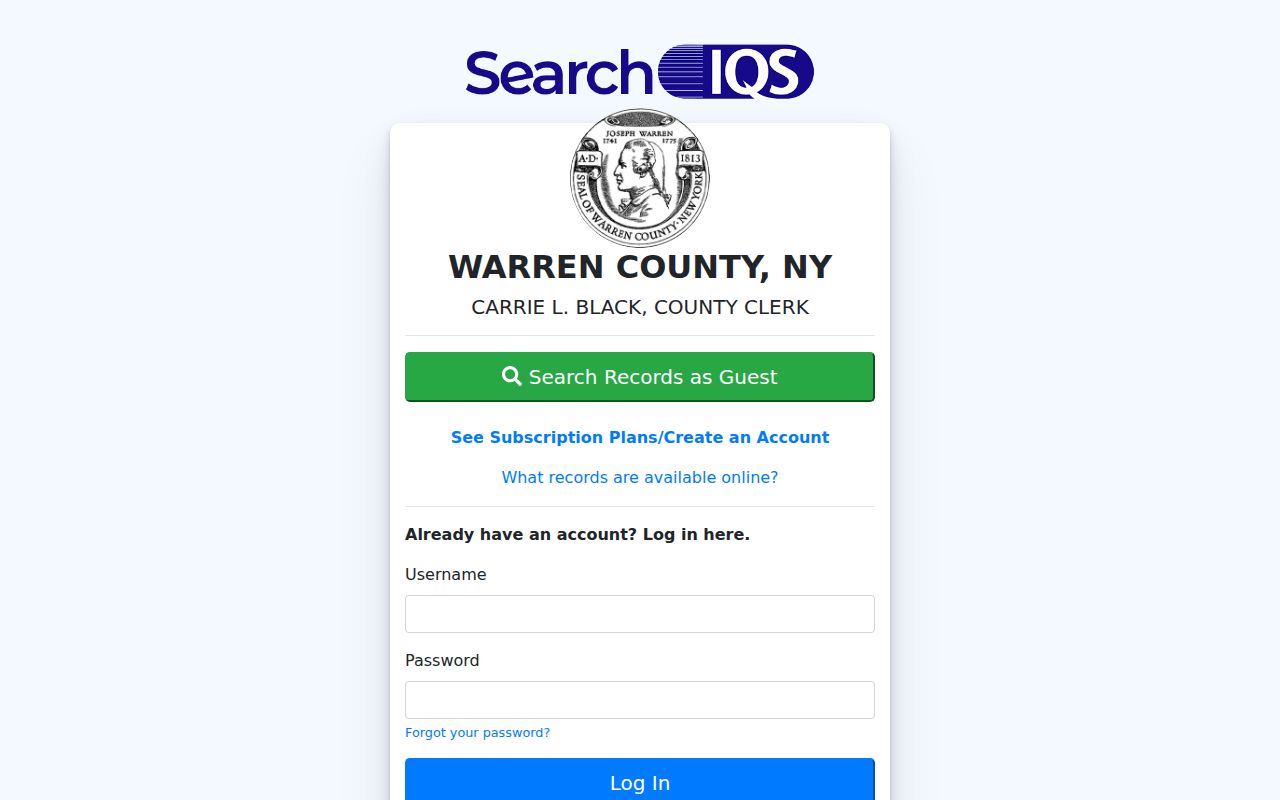
The online deed index reaches back to about 1963. Older Indexbooks carry the earlier chain, but the current-owner question almost always sits within the indexed period.
How Current Is Warren Ownership
Deeds are recorded as events happen. Assessment rolls, by contrast, are annual snapshots supported by transfer reporting. Warren County promises no fixed lag between a recording and an owner-field update. A just-recorded deed can easily be newer than the owner shown in GIS. It can also be newer than the owner on a final roll. This gap is normal, not a red flag.
When you cite results, give the recording date and the roll year. If two records disagree, state the conflict plainly. The Clerk shows a named grantee on the later deed. The assessment source still displays the earlier owner. RPTS can address a pending update. Only the deed trail, though, answers the conveyance question itself.
Warren Entity and Estate Owners
When a deed names a corporation as grantee, run the exact name through New York's entity database. Confirm its status and filing details there. Do not swap in an agent, an officer, a service address, or an assumed beneficial owner. Match the actual grantee instead. The entity record is supporting context. It is not another land index.
Estate and fiduciary deeds may need probate context from the Warren County Surrogate's Court. A trust name can shield its beneficiaries entirely. Report the vesting the deed shows, and resist guessing at the people behind it.
Warren Fraud Alerts for Owners
The County Clerk offers free name-based alerts covering deeds and mortgages. Enrollment takes only a name, an email address, and a Warren County selection. The alert earns its keep after ownership is confirmed. It can flag any new recording for review.
The official fraud-alert page explains the enrollment steps.
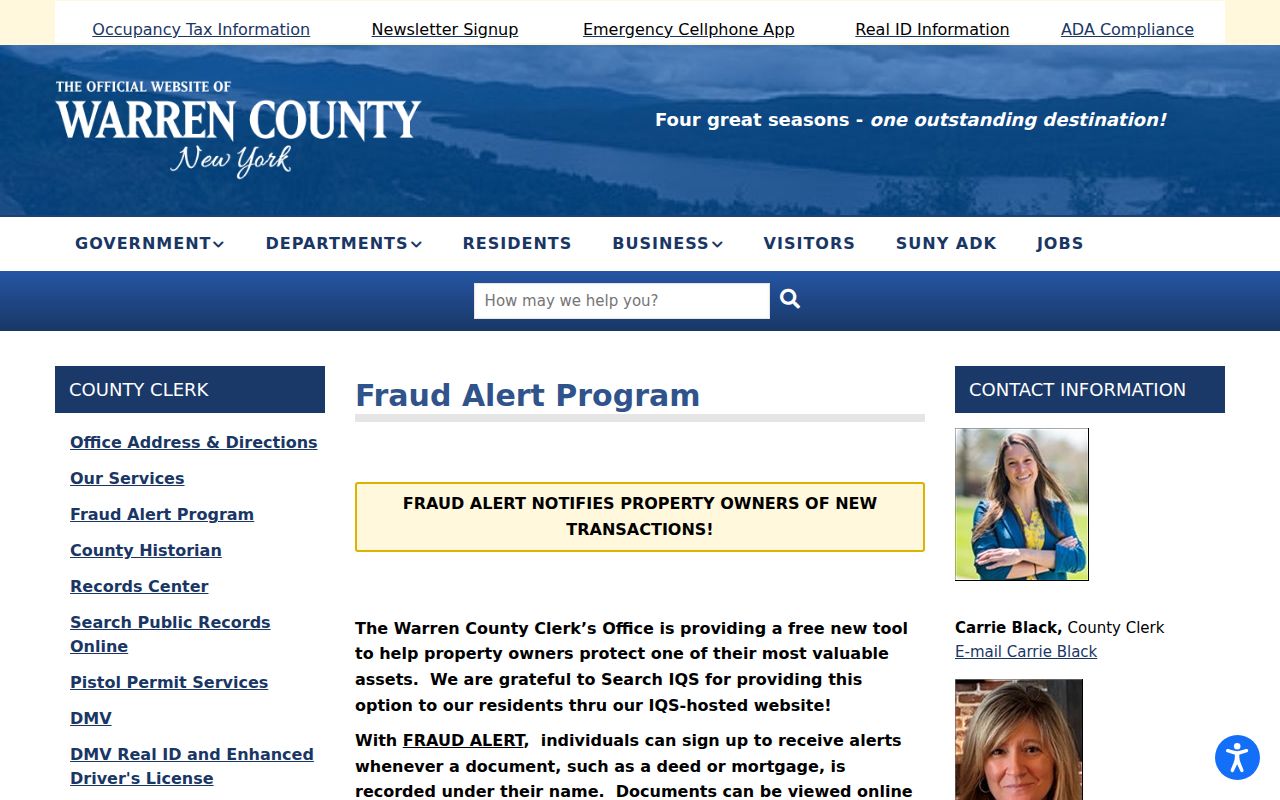
A same-name event may have nothing to do with your parcel, and the alert is notification only, not title insurance or proof of fraud.
Contact a Warren Property Owner
The assessment mailing field is the official public clue for parcel correspondence. Send a short letter that names the parcel. State the lawful property issue. Do not assume the mailing address is a residence. Do not assume the owner is the current occupant.
Address Confidentiality Program records and other protected information call for care. If a public source seems to expose a protected actual address, do not repeat it. Ask the custodian for the safe process instead.
Unclear Warren Current Owners
If the current owner stays uncertain, never merge names from different dates into one answer. Build a short chronology instead: the newest recorded conveyance, any correction or later filing, the assessment roll year, the GIS update, and the tax mailing display. Then state the conflict and name its source. The timeline does the explaining.
A title professional may be needed when deeds overlap, a description is ambiguous, an estate remains open, or unrecorded rights are claimed. Public property records can identify the issue. Resolving its legal effect is another matter.
Document the Warren Owner Check
Save the exact query, the access date, the parcel print key, the owner spelling, the deed citation, and the roll year. A current-owner result is far more useful when someone else can reproduce it. If a field changes later, your dated notes show which official record supported the earlier statement.
Repeat the owner check before any important decision. Another deed, correction, or roll update can post at any time. Preserve the earlier citation rather than overwriting it. The two dated results may explain when and why the change occurred.
Keep a current-owner report narrow. Include the parcel identity, the dated owner display, and the newest matching deed. Also note any clear update conflict. Extra personal details add risk without improving the property conclusion.